Is Live Shopping changing the face of e-commerce?
The social selling phenomenon has been gaining pace for the past 5 years
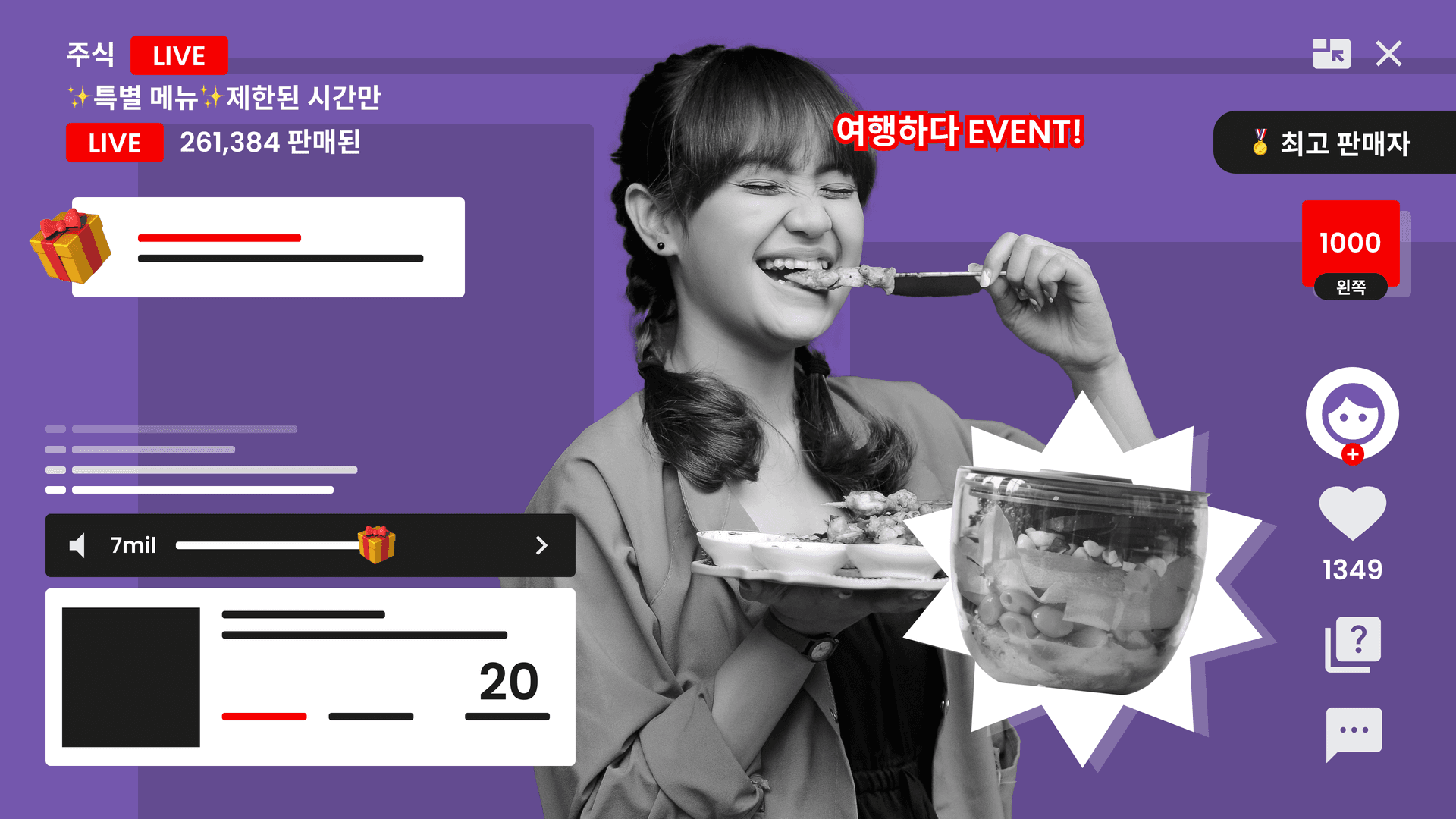
It’s bold, it’s brash and it’s 24 hours a day. You may not be aware of it yet, but this e-commerce juggernaut is on its way to the UK. It’s likely to start small, but it has the potential to fundamentally disrupt the way that all of us shop online.
In South Korea alone, the Live Shopping market is worth £7bn a year, accounting for 12% of all online retail sales. And it’s forecast to grow further in the next 12 months.
The two biggest Live Shopping platforms in Korea, Naver and Kakao, are growing in influence, constantly refining their offering and drawing ever-larger audiences. The business case has been made, the market loves it, and it shows no sign of slowing down.
We're not sure which platform will deliver Live Shopping to the UK yet. But we know that, when it does get launched, it could change the e-commerce space irrevocably.
So, what is Live Shopping, and why should anyone care?
Think QVC TV shopping, but now it’s on your phone, with thousands of retailers broadcasting their own retail channel, all day, every day. Each demonstrating, promoting and selling consumer products in real-time.
Live Shopping is fast-paced and personal, combining the interactive engagement of live streaming, real-time communication and time-sensitive discounts with the convenience of e-commerce. And it’s all packaged within the same mobile platform.
In many ways, it harks back to the old format of dynamic, in-person selling, but overlays this with greater online convenience and flexibility. It transports the shop to the consumer, whenever and wherever they want. Once experienced, it seems to have an unbreakable hold on the shopper, not unlike how many users will continuously scroll on TikTok and Instagram. The result is a habitual use and consumer compulsion that requires an increasing amount of feeding. What’s not to like?!
How did this happen?
Live Selling has been around in the APAC region for over four years; an idea initially driven by necessity from the Covid pandemic of 2020, it has now flourished into what has become an essential retail channel.
The evolution of this online retail channel has taken different forms for each country in the region. In Vietnam and Indonesia, the Live Shopping marketplace is dominated by small, independent sellers who can broadcast spontaneously, from locations such as spare bedrooms, with little production value. At times, it can feel a little chaotic, where anything goes (and generally does). It leaves you feeling as though you’ve been in a busy, jostling Hong Kong street market, which is not an experience that everyone would enjoy.
In contrast, the Korean marketplace has fully embraced and refined this retail format. Sellers take a sophisticated and professional approach by using structured broadcast times, studios, hired professional show hosts and influencers. Major manufacturers and retailers, through to small independents, have capitalised on this dynamic and direct consumer channel to great effect, for both sales and brand building purposes.
My experience
I recently spent some considerable time in Seoul, exploring the Live Shopping market; I talked to sellers, ranging from small independent retailers to global corporations. More importantly, I also spoke to consumers, who not only find this form of consumerism invaluable, but - in many cases - it’s become an almost daily habit.
The one thing that dominates any conversation about this virtual shopping experience is the strength of engagement within Live Shopping. Retailers in Korea now have an interactive platform, which they use to build a hyper-personalised relationship with potential consumers. It also gives them the ability to showcase products, create excitement around product lines and answer queries in a way that no other platform allows.
Consumers love the crossover between the social and retail dynamic, including the opportunity to explore products on their own, or with friends, and receive discounts and one-off offers that would not be available elsewhere. This type of engagement makes the consumer feel part of an event, that’s underpinned by a strong feeling of urgency or ‘FOMO’; "Do I buy now or regret missing the deal of the century?". It’s an interesting dynamic, not unlike the jostling crowds at January sales, but with Live Selling, it’s all year round.
Most importantly for the consumer, amongst the excitement and enjoyment, there’s also the safety nets of trust and credibility. These are strengthened throughout the experience, with easy access to peer reviews (for sellers and products) and use of integrated payment gateways that are commonly used online. These features help to guarantee peace-of-mind, offering tracking services, free delivery and simple returns.
The shackles of the conventional online shopping model are being thrown aside by a new generation of consumers in Korea. Although the digitally savvy Gen Z consumer initially dominated this market, the appeal of Live Shopping within Korea has now spread across all age groups. Regular online shopping habits have continued, but what was once a complementary channel is now creating a market all of its own. Consumers have definitely shown a preference for the more engaging and dynamic experience of Live Shopping.
How does it work?
There are no overheads; neither Naver nor Kakao charge to broadcast on their platforms. Instead, their finance model charges a small percentage on each completed transaction made through their online checkout services. The retailer only pays for what they sell and the consumer gets the service for free.
Banner ads and general visibility of a vendor’s store are not governed by the size of a marketing budget, but by the number of viewers per Live Shopping broadcast and volume of sales generated. Stores are rewarded for activity by getting prime time slots and higher positioning in listings.
In Korea, the broadcasts are scheduled and advertised, making it simple for consumers to set calendar reminders and share upcoming shows with friends. It’s not uncommon for broadcasts from large corporates to achieve six-figure viewing audiences for a one-hour show, and it’s worth remembering that many broadcast five shows a day, every day.
Each seller has their own bespoke studio facilities, with many employing professional hosts or influencers for each broadcast. They also have a small team of specialist staff available to deal with messaging, camera operation and pricing strategy.
Of course, many of the thousands of retailers broadcasting on these Live Shopping channels are small, ranging from lone, independent sellers using it as a side hustle, to small brands that are starting to establish themselves. Live Shopping has low barriers to entry and has, therefore, democratised broadcast e-commerce in a way that’s not been seen before. Anyone can create a channel, anyone can become a seller, and these retailers can sell anything they want. Their phone is the camera and any room can become their studio.
Experience-driven retail
The popularity of Live Shopping highlights a gradual market shift to experience-driven retail, where interactivity and entertainment value, at the point of engagement, is just as important as the act of product purchasing.
This same interactivity with consumers, encouraged during broadcasts, offers retailers a quantity and quality of data that could not be achieved through other outlets. Sales messaging and price points can be adjusted instantly, driven by real-time metrics, allowing retailers to fine-tune their offerings and respond faster to consumer requirements.
In the same way you do when viewing Reels on Instagram, if a shopper gets bored with one broadcast they can swipe onto the next. All the while, relevancy algorithms ensure that you stay on track, within your product set bubble. A shopper is instantly exposed to retailers that they may not have initially considered or be aware of, but they’re all selling products that may suit their needs.
This is data-fed consumerism in its most pure form. Hyper-personalisation data and machine learning ensure that consumers are given what they need, when they need it. They’re constantly being fed options when browsing notified of Live Shopping broadcast events that meet specific needs, at specific times of the year.
Things have to change
I suspect that many of us have spent hours trawling through multiple online stores over the Christmas period. All stores look the same, constantly swiping vertically and horizontally. You’ll see the same product images and spend time searching for reviews, sizing guides, returns policies and discount codes, before learning that you need to spend a little more to qualify for free postage.
It’s dull, two-dimensional and time-consuming. Brand awareness disappears as all digital experiences merge into one; you have no idea if you’re on ASOS, Next, Seasalt or Uniqlo. In contrast, Live Shopping elevates the experience above the mundane, adding vibrancy, creating personal connections and bringing the art of selling back to the audience.
The future
In one form or other, the interactivity, communication and direct nature of Live Shopping will reshape retail expectations for consumers. And the impact will be seen across many different industries:
Electrical and white goods: Large electrical and white goods manufacturers will gain a direct-to-market experience that offers both convenience and cost savings to the consumer. This can be used for both product launches and end-of-line clearances. No intermediate, middleman costs, just 'tap and deliver'.
Bespoke personalised goods: Currently, small retailers in the UK and US who create bespoke products tend to partner with providers such as Etsy and Not On The High Street. But this new, engaging and direct form of e-commerce offers a very real challenge to these channels. Having their own Live Selling channel reduces overheads for the seller, while offering a more compelling and personal shopping experience for the consumer.
Skincare and beauty: No need to attend ‘Tupperware Parties' for cosmetics (much used by brands such as Tropic). With Live Selling, the party comes to your phone, offering personal discounts that aren’t available elsewhere.
Clothing and shoes: Live Shopping broadcasts allow the consumer to see products in action, being worn, how they fit and what the fabric actually looks like. This gives the consumer a greater level of control, knowledge and accuracy than static, edited images do.
Outlet villages: It would be fair to question the need for physical outlet villages when each brand can have their own broadcast channel direct to the consumer's phone. Without the real estate overheads, the choices can be greater and discounts larger, available to all, and no longer dependent on geographic location.
Live Shopping has the potential to disrupt the market and transform consumers online behaviour. To keep up, existing retail platforms will have to find new ways to incorporate and embed these features into the fabric of their experiences. They will have to pivot their online offering, or face withering on the vine, falling out-of-step and out-of-favour with the consumer.
Whatever form Live Shopping takes in the coming years, this new experience could have the same effect on online retail as online shopping has had on the high street. Is retail ready for this? Judging from what I saw over the Christmas period, I would say no.